北京大学学报(医学版) ›› 2020, Vol. 52 ›› Issue (2): 368-372. doi: 10.19723/j.issn.1671-167X.2020.02.027
一种新的基于全口义齿测量的牙列缺失修复用颌位记录托盘
刘洋,胡菳洳,赵一姣,王勇,孙玉春,潘韶霞,冯海兰( )
)
- 北京大学口腔医学院·口腔医院,修复科,口腔医学数字化研究中心 国家口腔疾病临床医学研究中心 口腔数字化医疗技术和材料国家工程实验室 口腔数字医学北京市重点实验室,北京 100081
A novel tray for recording maxillomandibular relationship of edentulous patients based on dimensional surveying of complete dentures
Yang LIU,Jin-ru HU,Yi-jiao ZHAO,Yong WANG,Yu-chun SUN,Shao-xia PAN,Hai-lan FENG()
- Department of Prosthodontics, Center for Digital Dentistry, Peking University School and Hospital of Stomatology & National Clinical Research Center for Oral Diseases & National Engineering Laboratory for Digital and Material Technology of Stomatology & Beijing Key Laboratory of Digital Stomatology, Beijing 100081, China
摘要:
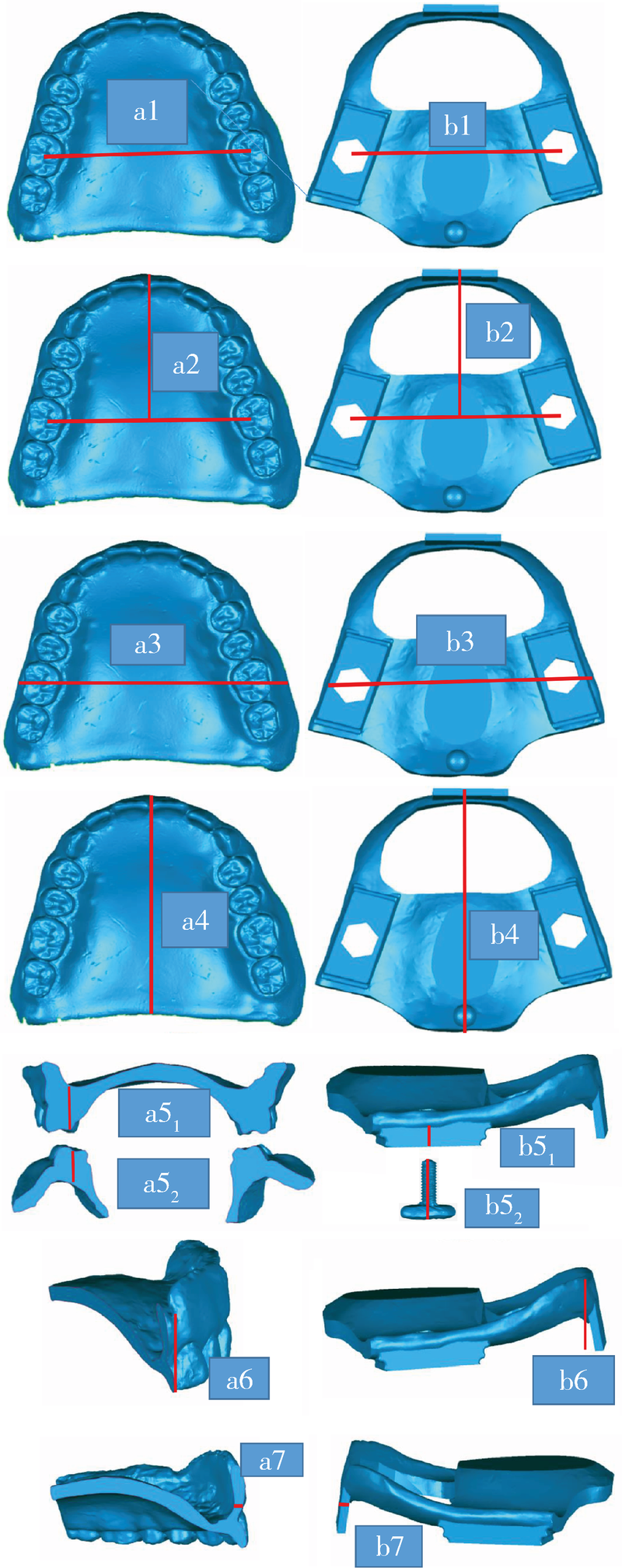
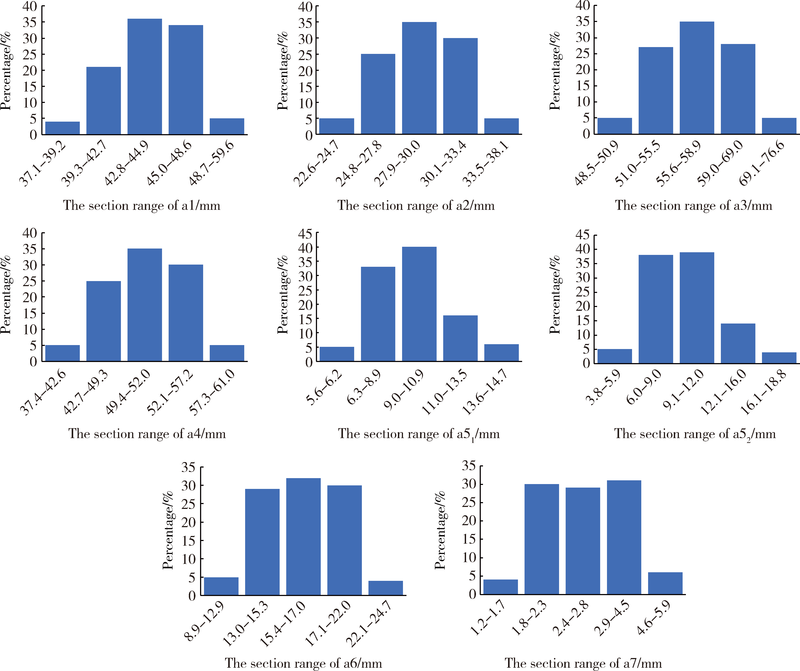
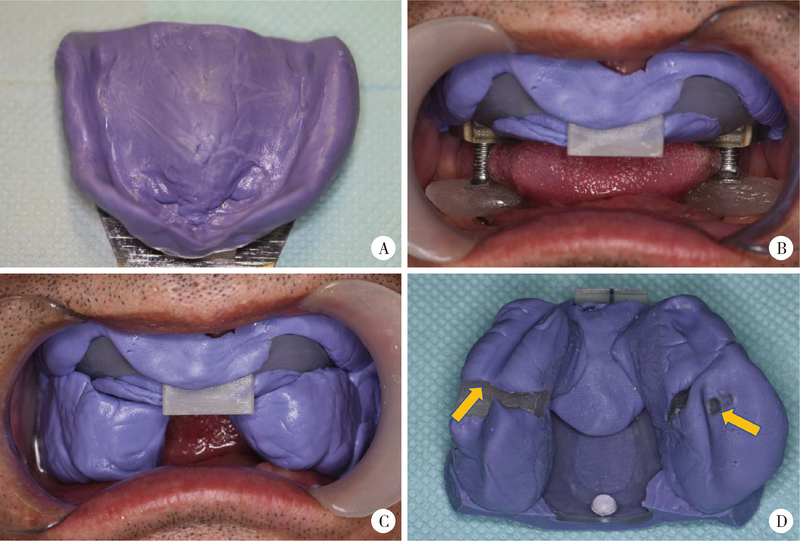
目的 测量全口义齿的相关特征数据,并以此设计用于牙列缺失患者全口义齿修复的一种新的,可记录各种参数的颌位记录托盘.方法: 对100副在临床应用的全口义齿,测量双侧上颌第一磨牙中央窝间距a1,上颌第一磨牙中央窝连线至义齿前缘距离a2,上颌义齿宽度a3,上颌义齿长度a4,右上颌第一磨牙近中舌尖至基托组织面高度a51,右下颌第一磨牙中央窝至基托组织面高度a52,上唇系带切迹至上颌中切牙切端连线的高度a6,上中切牙区唇侧基托最薄处厚度a7,并以此设计颌位记录托盘支撑杆孔间距b1,支撑杆孔至托盘前缘距离b2,托盘宽度b3,托盘长度b4,上颌后牙区托台高度b51,支撑杆高度b52,前部手柄高度b6,前部手柄厚度b7,以制作不同型号的颌位记录托盘.结果: 各组数据的最小值,平均值,最大值(单位:mm)分别如下:a1:37.1,44.5,59.6;a2:22.6,29.0,38.1; a3: 48.5,58.2,76.6; a4: 37.4,50.8,61.0; a51: 5.6,9.5,14.7; a52: 3.8,9.9,18.8; a6: 8.9,16.6,24.7; a7: 1.2,2.8,5.9.设计大,中,小3种号型的颌位记录托盘.临床应用时,首先在托盘组织面用硅橡胶重衬,托台平面和前部手柄下缘确定牙合平面;继而安装下颌支撑杆,旋转螺丝至合适的垂直距离;然后在支撑杆前后放置硅橡胶,确定水平关系;最后在前部手柄唇侧画线标记面部中线及微笑,静息时上唇下缘位置.结论: 本研究测量的全口义齿数据对分析修复空间提供了参考,本研究设计的托盘为无牙颌患者全口义齿修复时确定颌位关系提供了一种新方法.
中图分类号:
- R783.6
| [1] | 王兴 . 第四次全国口腔健康流行病学调查报告 [M]. 北京: 人民卫生出版社, 2018. |
| [2] | Kassebaum NJ, Bernabé E, Dahiya M , et al. Global burden of severe tooth loss: A systematic review and meta-analysis[J]. J Dent Res, 2014,93(7 Suppl):20S-28S. |
| [3] | 张书宇, 董华 . 上海市嘉定区65~74岁老年人群牙列缺损及修复现状调查[J]. 上海口腔医学, 2018,27(5):522-525. |
| [4] | 冯海兰, 徐军 . 口腔修复学[M]. 第2版. 北京: 北京大学医学出版社, 2013. |
| [5] | 徐军 . 总义齿与可摘局部义齿的设计[M].中国大百科全书出版社, 2005. |
| [6] | Rahn AO, Ivanhoe JR, Plummer KD. 全口义齿教科书[M].冯海兰,译. 第6版. 北京:人民卫生出版社, 2011. |
| [7] | 阿部二郎 ,小久保京子,佐藤幸司.下颌吸附性义齿和BPS临床指南[M]. 骆小平译. 北京:, 人民军医出版社, 2014. |
| [8] | Bhargav A, Sanjairaj V, Rosa V , et al. Applications of additive manufacturing in dentistry: A review[J]. J Biomed Mater Res B Appl Biomater, 2018,106(5):2058-2064. |
| [9] | Al-Zarea BK, Sughaireen MG . Comparative analysis of dimen-sional precision of different silicone impression materials[J]. J Con-temp Dent Pract, 2011,12(3):208-215. |
| [10] | Hayakawa I. 全口义齿原理与实践: 塑造心中的义齿形象[M]. 张玉梅,程静涛, 译. 北京:人民军医出版社, 2005. |
| [11] | 徐军 . 总义齿学续[M]. 北京: 人民卫生出版社, 2015. |
| [12] | 佐藤幸司, 石川功和, 生田龙平 . 初学者的总义齿制作方法[M]. 包扬,译. 沈阳: 辽宁科学技术出版社, 2016. |
| [13] | 吴国锋, 张玉梅 . 全口义齿临床修复规范[M]. 北京: 人民军医出版社, 2012. |
| [14] | 王子轩, 孙玉春, 周永胜 . 数字化全口义齿的研究和应用进展[J]. 口腔颌面修复学杂志, 2017,18(5):291-295. |
| [1] | 杨静, 许晓韵, 郑丹妮, 凌晓彤, 屈留洋, 柳登高. 544例慢性唾液腺炎的临床与影像学特点及病因分析[J]. 北京大学学报(医学版), 2026, 58(3): 650-657. |
| [2] | 李峥, 吕珑薇, 张晓, 夏丹丹, 张萍, 刘云松, 周永胜. 基于干细胞和生物材料调控的口腔颅颌面骨再生的研究进展[J]. 北京大学学报(医学版), 2026, 58(2): 272-277. |
| [3] | 杜文, 章文博, 于尧, 刘硕, 苏惠裕, 胡耒豪, 唐祖南, 吴彬彰, 陈震, 李家琦, 王昊, 彭歆. 口腔颌面部肿瘤"数智化外科"诊疗流程探索与临床应用[J]. 北京大学学报(医学版), 2026, 58(2): 278-284. |
| [4] | 王昕莹, 程雪原, 张孟钧, 李菲, 段晋瑜, 乔静. 浓缩生长因子联合引导性组织再生术治疗下颌磨牙根分叉病变的疗效[J]. 北京大学学报(医学版), 2026, 58(2): 372-379. |
| [5] | FarinEbrahimi, 冯志强, FarazEbrahimi, 韩玮华, 于子杨, 贾宽宽, 安金刚. 上颌药物相关性颌骨坏死的不同分期手术治疗效果[J]. 北京大学学报(医学版), 2026, 58(1): 107-114. |
| [6] | 单珅瑶, 杨咏涛, 李文博, 温奥楠, 高梓翔, 商相宜, 王勇, 赵一姣. 基于下颌运动轨迹的𬌗架关键参数计算方法[J]. 北京大学学报(医学版), 2026, 58(1): 115-125. |
| [7] | 杨咏涛, 田淯文, 单珅瑶, 李文博, 商相宜, 王艺蓁, 郭殊玮, 高梓翔, 温奥楠, 赵一姣, 王勇. 基于多视图立体视觉的无牙颌种植固定修复软组织数字印模的方法[J]. 北京大学学报(医学版), 2026, 58(1): 126-132. |
| [8] | 刁畅, 王时敏, 李曼, 潘韶霞, 刘洋. 牙列缺失种植覆盖义齿集中𬌗型的临床研究[J]. 北京大学学报(医学版), 2026, 58(1): 133-138. |
| [9] | 于录, 吴灵, 刘筱菁, 李自力. 基于数据库相似性检索的正颌外科手术规划技术流程可行性研究: 随机对照试验[J]. 北京大学学报(医学版), 2026, 58(1): 145-152. |
| [10] | 杨雨婷, 屈留洋, 郑丹妮, 凌晓彤, 许晓韵, 柳登高. 1 812例唾液腺结石患者的人口学特征和临床特点[J]. 北京大学学报(医学版), 2026, 58(1): 153-159. |
| [11] | 王月, 梁宇红. 繁茂型牙骨质-骨结构不良1例[J]. 北京大学学报(医学版), 2026, 58(1): 220-224. |
| [12] | 李文博, 沈玉凤, 杨咏涛, 单珅瑶, 高梓翔, 温奥楠, 商相宜, 田淯文, 郭殊玮, 王艺蓁, 王勇, 赵一姣. 单侧磨牙咬合干扰的口颌肌表面肌电指标体系构建与判别模型验证[J]. 北京大学学报(医学版), 2026, 58(1): 89-98. |
| [13] | 于子杨, 郭厚佐, 蒋析, 韩玮华, 林野. 穿颧种植体上颌窦段成骨的影像学研究[J]. 北京大学学报(医学版), 2025, 57(5): 967-974. |
| [14] | 宋凤岐, 徐心雨, 刘筱菁, 李自力. 上颌骨前部和整体顺时针旋转改善骨性Ⅲ类牙颌面畸形患者鼻旁凹陷的对比[J]. 北京大学学报(医学版), 2025, 57(5): 980-988. |
| [15] | 杨源源, 张珊珊, 俞光岩, 杨辉俊, 杨宏宇. 部分下颌下腺切除术治疗下颌下腺良性肿瘤的临床效果[J]. 北京大学学报(医学版), 2025, 57(2): 334-339. |
|
||
